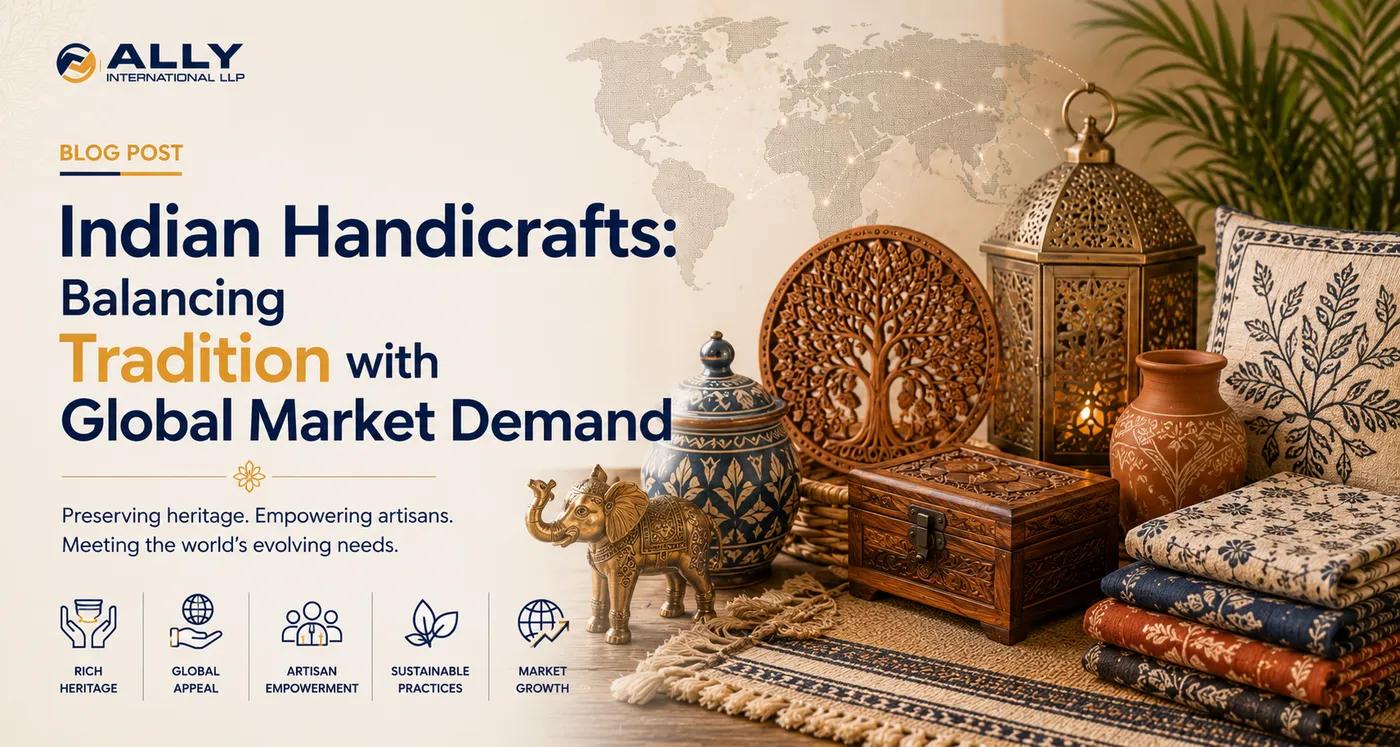
Indian handicrafts are more than just products — they are a reflection of history, culture, and generational skill. For global buyers, they offer something unique: authenticity combined with diversity. However, sourcing handicrafts for international markets requires more than appreciation for craftsmanship — it requires adaptation.
Each region in India has its own identity. Metalwork from Moradabad, wooden carving from Saharanpur, blue pottery from Jaipur, and leather goods from Kanpur all represent distinct traditions. These products are deeply rooted in heritage, but global markets often demand a more refined, minimal, and functional approach.
One of the biggest shifts in recent years has been the move toward design adaptation. Traditional designs, while rich and detailed, may not always align with modern interior trends. Buyers today prefer cleaner lines, subtle finishes, and neutral tones. Successful sourcing involves working with artisans to modify designs without losing their essence.
Material selection is equally important. For example, metal products need to meet international standards for coating and finishing, especially for decor and kitchenware. Similarly, wooden products must be properly seasoned and treated to withstand different climates. Without these precautions, products may warp, crack, or fail after export.
Packaging is another critical factor often overlooked. Handicrafts, especially fragile items like ceramics or intricate decor pieces, require specialized packaging. Export-standard packaging ensures that products reach their destination without damage, maintaining both quality and customer satisfaction.
Consistency is one of the biggest challenges in handicraft sourcing. Since many products are handmade, variations are natural. The goal is not to eliminate variation completely but to maintain acceptable limits. This can only be achieved through clear specifications and regular quality checks.
Ethical sourcing is also gaining importance. Buyers today want assurance that products are made in fair working conditions and that artisans are paid appropriately. Transparent sourcing practices not only build trust but also add value to the product story.
For brands looking to stand out, Indian handicrafts offer an opportunity to create collections that are both meaningful and market-ready. However, success lies in balancing tradition with modern expectations.
When approached correctly, handicraft sourcing becomes more than a supply chain — it becomes a story that customers connect with.
Planning to source from India?
Let our on-ground team handle suppliers, quality, and logistics for you.